Sciatica vs. Piriformis Syndrome: Identifying Desk Worker Nerve Pain
Long hours at a desk can take a toll on your body, often leading to sharp, radiating pain down the back of your leg. Many office workers assume any leg pain is a permanent spinal issue that requires invasive treatment. At The MVMT Clinic St.Thomas, we see professionals every day who are struggling to sit through meetings due to this exact discomfort. Finding the true source of your pain is the first step toward effective sciatic nerve pain relief St. Thomas residents can rely on.
True sciatic pain originates in the lumbar spine, while other conditions mimic it by irritating the nerve further down the line. Identifying the exact point of compression dictates whether you need joint mobilization or targeted soft tissue release. Our physiotherapy and massage therapy services are designed to pinpoint this location accurately. By understanding the mechanical cause of your symptoms, we can build a treatment plan that targets the root of the problem rather than just masking the pain.
In This Article:
- The Root Cause of Desk Worker Leg Pain
- How can you tell the difference between sciatica and piriformis syndrome?
- Why Stretching Routines Often Worsen the Irritation
- Clinical Approaches to Restoring Nerve Mobility
The Root Cause of Desk Worker Leg Pain
Sitting for eight hours a day changes your pelvic mechanics and shortens your hip flexors. If you commute down Talbot Street and then sit at a desk all day, the constant pressure on your gluteal muscles restricts blood flow and increases tissue tension. This prolonged static posture places abnormal mechanical stress on the lumbar discs and the surrounding musculature. Sitting alters the natural curve of the lumbar spine, placing undue pressure on the intervertebral discs. The longer you sit without a break, the more your tissues adapt to this shortened and compressed state. Over time, this stress leads to inflammation that can trap the nerves exiting your lower spine.
A quick tip to remember:
→ Pain location is a symptom, but the site of compression is the true diagnosis.
How can you tell the difference between sciatica and piriformis syndrome?
True sciatica involves the compression of the sciatic nerve root at the spinal level, often due to a herniated disc or spinal stenosis. This typically presents with pain that travels below the knee and into the foot, sometimes accompanied by tingling, numbness, or weakness in the lower extremity. Piriformis syndrome occurs when the piriformis muscle in the gluteal region spasms and traps the sciatic nerve locally rather than at the spine. Patients with this syndrome usually feel a deep ache in the buttock that radiates down the back of the thigh but rarely extends past the knee joint.
From a professional standpoint:
→ If your pain worsens significantly when you transition from sitting to standing, the piriformis muscle is highly suspect.
Why Stretching Routines Often Worsen the Irritation
When people feel tight muscles and nerve pain, their first instinct is to pull up an online video and stretch the area aggressively. Attempting to stretch an actively inflamed nerve actually increases the tension on the neural tissue and can trigger a severe flare up. Nerves are highly sensitive structures that do not respond to physical stress the way muscles do. When a nerve is stretched, its internal blood supply is pinched off, causing it to send stronger pain signals to the brain. Stretching a spasming piriformis muscle without first downregulating the nervous system will cause the muscle to contract even harder in self defense. This is why self-guided interventions often turn a manageable ache into a debilitating condition that requires a longer recovery period.
A quick tip to remember:
→ You cannot stretch a nerve back to health, you must restore the mechanics of the joints and tissues surrounding it.
Clinical Approaches to Restoring Nerve Mobility
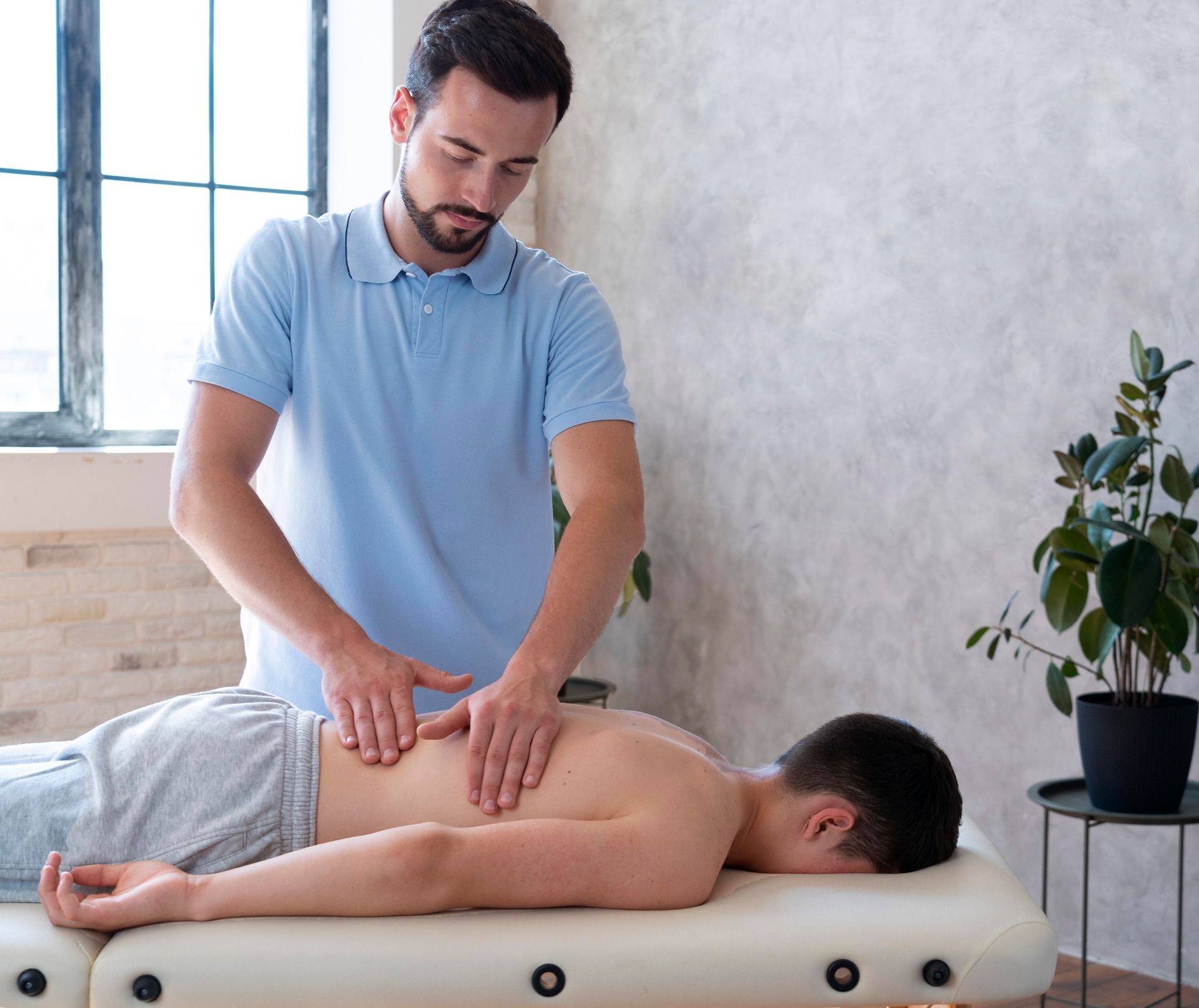
Our clinical team focuses on identifying the mechanical blockage and restoring normal tissue gliding. If the spine is the culprit, our physiotherapists utilize joint mobilization techniques to open the neural foramina and relieve the pressure on the disc. If the piriformis is trapping the nerve, our massage therapy services can release the deep gluteal tension without aggravating the nerve bundle. We also introduce specific nerve flossing exercises that encourage the sciatic nerve to glide smoothly through its mechanical pathway without adding tension to the system.
From a professional standpoint:
→ Resolving nerve pain requires a combination of manual therapy to reduce compression and corrective exercise to prevent recurrence.
Reclaiming Your Comfort at Work
Restoring the proper gliding mechanics of your nervous system is entirely achievable with the right clinical guidance. Living with daily leg pain changes how you work, how you move, and how you enjoy your downtime. A thorough assessment will identify exactly what is causing your discomfort so you can stop guessing and start healing. Schedule an evaluation with our clinical team to get a clear diagnosis and a personalized treatment plan today.
Share This Blog